David Slack - Web developer


Search:
- 29 North
- Act Maintenance Solutions
- Ady Mills
- Arm & Eye
- Documenting the Mundane
- DS Card
- Ebay shop - Tech Genome
- Elevator Studios
- ESS Newton
- Farango
- Lilly Grove
- Lost and Found
- Lucky Fingers
- Luna
- My BubbleBee
- My website
- Relish
- Rotary Club of Liverpool
- SATandCABLE
- Senua Digital
- Senua Hydroponics
- The Natural Apothecary
- Vehcam
- Wind in the Willows Child Care
Off-site News
Drupal 11.4.0 is now available
The fourth feature release of Drupal 11 is another performance breakthrough. Using only a third of the database and cache lookups compared to Drupal 11.0 and 10.6 for the same requests. It also comes with 15-25% better compression of JS and CSS, much faster translation file handling, a new native command line interface, improved password hashing and a lot more.

With Drupal 11.3, we announced that it was the biggest performance improvement of the decade. Drupal 11.4 is arguably the biggest performance improvement of the decade again!
Drupal 11.4 reduces database queries by half compared to 11.3 across a wide range of requests due to optimizations in how entity fields are loaded.
Now, on a completely cold cache, Drupal 11.4 will execute just over 1/3rd of the database and cache lookups compared to Drupal 11.0 or 10.6, representing hundreds of milliseconds saved.
As well as entity loading, entity listing queries have also been significantly improved via reducing the number of table joins, leading to fewer slow queries. This should particularly benefit sites using JSON:API.
To reduce the cost of rendering menus and improve render cache hit rates, menu blocks now have a configuration option to not generate CSS classes for ancestor menu links.
Applying recipes, such as setting up Drupal CMS is twice as fastWe have made recipe-based site installation twice as fast. This significantly improves the UX of installing Drupal CMS and other site recipes. Installing individual recipes is also markedly faster.
Translation file handling: dramatically faster with a modern APIImporting translations during the installer or during site operation is now much faster. On a test site with 66 projects and 38 languages, checking for translation updates was 87% faster on Drupal 11.4 compared to 11.3.
The APIs handling translation files and import have undergone an extensive modernization effort. All .inc files and several important APIs in locale.module have been deprecated and updated to OOP with special attention paid to performance and organization.
15-25% better compression of JS and CSSDrupal now supports Brotli compression for aggregated CSS and JavaScript files in addition to the existing gzip compression. Brotli typically provides 15-25% better compression ratios than gzip, resulting in faster page loads for browsers that support it. The feature relies on the PHP Brotli extension: ext-brotli.
Immediate security updates of key dependencies allowed in core-recommendedThe drupal/core-recommended package no longer pins minor versions for dependencies like Guzzle, Twig, and Symfony Polyfills. In the past, stricter version rules and Composer 2.9's blocking behaviour forced sites to wait for a new Drupal release to get important security fixes. Now, you can install these security fixes immediately. Since the updated dependencies at that time may not have been tested with Drupal core yet, site owners should ensure adequate quality assurance occurs before deploying to production.
New experimental extensible native command line interfaceA new extensible ./vendor/bin/dr command line interface was added. While Drupal already includes a CLI script with hardcoded commands, it is not extensible. This new interface was built by a team which included the maintainers of the Drush utility. Drush has been a mainstay for people using Drupal with the command line. Now a transitional period starts as Drush is gradually replaced with the core dr CLI over time. Learn how to make your existing Drush commands compatible.
Simplified and updated default experienceThe default installation, the Standard profile, is now leaner. It no longer includes the Article and Page content types, and commenting is disabled by default. Further core startup simplifications are planned for upcoming releases.
The Navigation module is now enabled in the standard administrative interface. The legacy Toolbar module remains available but is scheduled for removal in Drupal 12.
A new overview page has been added under the "Manage display" tab for content entity bundles. Previously, this tab led to the form editing the default view mode. Now, it lists all display modes for the bundle with their label and description and allows one to toggle the enabled/disabled status. The listing makes it easier to integrate tools such as Drupal Canvas.
Distraction-free editing available with CKEditorText formats using CKEditor can now be configured to include the FullScreen plugin. This plugin lets users expand the editor to the whole browser viewport, giving more space to comfortably edit content in a distraction-free environment.
Improved password hashing availableThe password hashing algorithm is now configurable. The new argon2id option provides much stronger hashing compared to the old bcrypt method. Drupal 12 will default to argon2id, but your site can already start to adopt it. If you update the setting, users' passwords will be rehashed on their next login.
Do more with PHP attributesYou can now use attributes on your controllers to specify the routes the controller is used for. Any class in a module's Controller namespace (for example, Drupal\example\Controller) that have the Symfony\Component\Routing\Attribute\Route attribute will be picked up as route definitions. Even multiple routes can be defined on one class. This supplements the existing .routing.yml based declarations.
It is now possible to use the Drupal\Core\Entity\Attribute\Bundle attribute to define bundle classes, when in need of specific logic for an entity subtype. This previously required an entity_type_info or entity_type_info_alter implementation.
No more .theme files, only a few .module files leftAll .theme and .theme-settings.php files in core have moved to PHP classes. Support for .theme files is still planned to be retained in Drupal 12 to ease the transition, but will be removed in Drupal 13.
Most .module files have been converted too: 32 modules are fully converted to PHP classes, with 11 modules remaining (4 of which are deprecated for removal in Drupal 12).
A team of 26 key contributors worked on 57 issues since January 2026 to get here, making Drupal's code more consistent. Also thanks to the dozens of users that worked on the many decades old issues that this initiative built upon.
Front controllers now utilize symfony/runtimeDrupal now integrates the Symfony Runtime component to separate bootstrapping logic from request handling. This provides a clear separation of concerns between preparing the environment (runtime) and handling a request, which will also later enable better integration with FrankenPHP.
Write faster tests with new helper methodA new trait for kernel tests, HttpKernelUiHelperTrait, allows kernel tests to make HTTP requests to the test site and make assertions against the returned content. This has the potential for many browser tests to be converted to kernel tests, which are much faster to run because unlike browser tests, they don't fully set up a test site by running the Drupal installer.
New experimental administrative themeThe Gin administrative theme has been added to Drupal core as the "Default Admin" experimental theme. The theme includes a new dark mode option.
While it is not yet actually the default admin theme, when it becomes stable it will replace Claro as the look of Drupal's backend. We encourage module maintainers to test their module's UIs and provide feedback!

Since Drupal 11.3 Andrei Mateescu was appointed as a provisional general core committer and is now a Content Moderation and the Workflows module maintainer too. Also Edward Wu was appointed as provisional release manager.
Various wonderful contributors also took our call for subsystem maintainership:
- Moshe Weitzman is now a maintainer of the core CLI
- Derek Wright stepped up to be a Content Moderation and core CLI maintainer
- Kent Richards is a new accessibility maintainer
- Max Pogonowski was added as a maintainer for Menu UI and the token system
- Jürgen Haas and Sascha Eggenberger are maintainers of the new Default Admin theme
- Chris Weber was added as a maintainer for Settings Tray
- Stephen Mustgrave stepped up to maintain the Options module and Menu UI
- Lucas Hedding is now a maintainer for the Image module and the Authentication and Authorization subsystem
- Christian López Espínola is a new maintainer to the Language and Content Translation modules
We also thank maintainers that stepped down in this period:
- Heather Brooke Drummond stepped down from their maintainer role on Breakpoint and Responsive Image modules
- Brian Gilbert stepped down from his core mentoring role
- Wim Leers stepped down from being maintainer of Drupal's CKEditor integration, Editor module, JSON:API module and REST module
- Gareth Goodwin stepped down from maintaining the Umami demo
If you are looking to make the leap from Drupal user to Drupal contributor, or you want to share resources with your team as part of their professional development, there are many opportunities to deepen your Drupal skill set and give back to the community. Check out the Drupal contributor guide.
You would be more than welcome to join us at DrupalCon Rotterdam in September 2026 to attend sessions, network, and enjoy mentorship for your first contributions.
Drupal 12 is coming the week of December 7, 2026Drupal 12 will be released with the upcoming Drupal 11.5 at the beginning of December this year. Drupal 11.5 will be a Long Term Support release with version 11 support expected until the end of 2028.
Categories: Off-site News
Pages
Latest content
There are lots of developers out there with varying degrees of experience and expertise, some mid level, some junior and some senior. Some...

First thoughts are Symfony is ace!Only been using Symfony for 1 project but the amount of coding it has saved has been worth the time spent...
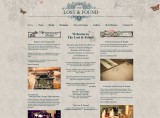
The Lost and Found website was built by myself (David Slack) and designed by Arm & Eye.The site was created to promote a bar and...
Social networks
Contact me here or catch me on one of
the social networks below
Off-site News
My blog
Wednesday, 2 August, 2017 - 06:56
There are lots of developers out there with varying degrees of experience and expertise, some mid level, some junior and some senior. Some developers...
Tuesday, 5 March, 2013 - 09:49
First thoughts are Symfony is ace!Only been using Symfony for 1 project but the amount of coding it has saved has been worth the time spent learning...
Monday, 3 December, 2012 - 10:07

As a web developer and web designer I need to take into account everything on a site from SEO, marketing, usability across devices, the look and feel...
Try this on your mobile

You should be able to use this right from the screen
Latest tweets
Calendar
| M | T | W | T | F | S | S |
|---|---|---|---|---|---|---|
|
|
1 |
2 |
3 |
4 |
5 |
6 |
|
7 |
8 |
9 |
10 |
11 |
12 |
13 |
|
14 |
15 |
16 |
17 |
18 |
19 |
20 |
|
21 |
22 |
23 |
24 |
25 |
26 |
27 |
|
28 |
29 |
30 |
|
|
|
|
Copyright David Slack - Web developer